

SCIENCE BEHIND RABEXIMOD
Mechanism of Action: From Target Engagement To Tissue Protection in CKD
Rabeximod Mode of Action at a Glance
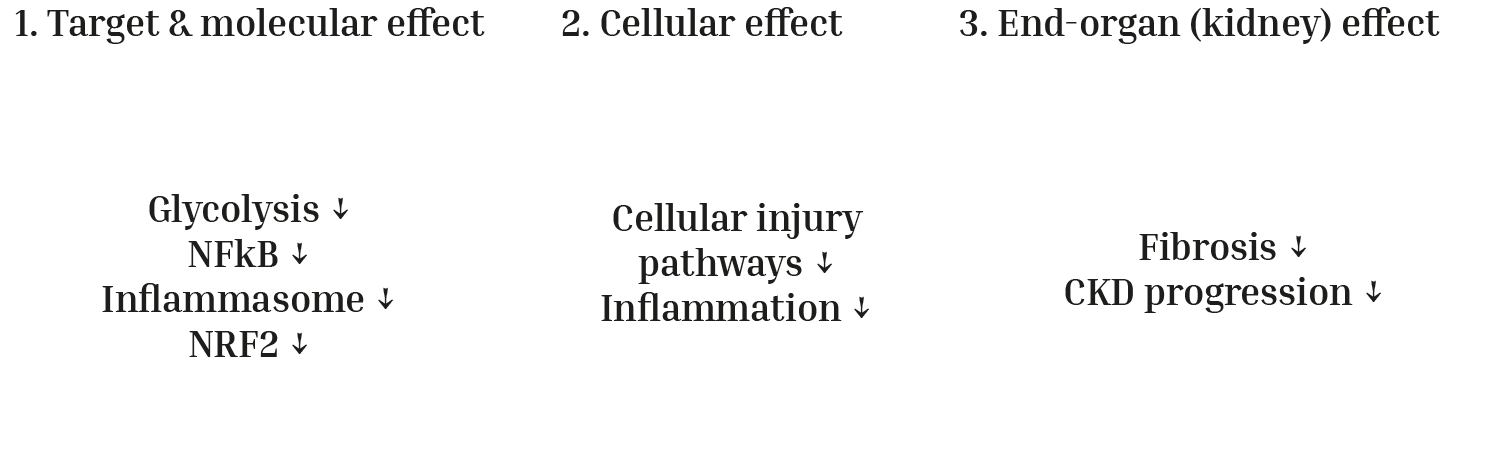
Cellular effects of rabeximod‑mediated PGK1 inhibition
Rabeximod inhibits PGK1, shifting cells away from glycolytic metabolism that fuels inflammatory activation. This metabolic reprogramming reduces inflammasome activity, lowers production of pro‑inflammatory cytokines, and enhances antioxidant defense via NRF2—together leading to a robust decrease in cellular inflammation.
Kidney tissue effects
By reducing inflammation, rabeximod helps limit tubular cell death and subsequent scar‑tissue formation, thereby mitigating kidney fibrosis.

High unmet medical need.
Chronic kidney disease affects hundreds of millions of people worldwide and often progresses silently until advanced stages. Symptoms of a declining kidney function are often unspecific and include fatigue, swelling (edema), changes in urination, nausea, and itching.
Despite recent therapeutic advances, many patients continue to experience steady loss of kidney function, driven by persistent inflammation, fibrosis, and metabolic stress. Current treatments slow decline but do not adequately address key biological drivers of progression, leaving a significant gap between today’s standard of care and the need to delay or prevent kidney failure.
There remains a clear and urgent need for new therapies that more effectively preserve kidney function, reduce long‑term complications, and improve patients’ experience of the disease—offering a better chance to avoid dialysis, transplantation, and the substantial personal and economic burden of advanced kidney disease.
-
Early combination therapy is reshaping CKD care, positioning rabeximod as a strong add‑on option with a unique mechanism of action.
Leveraging growing recognition of PGK1 as a key driver of inflammation and fibrosis in CKD.
Addressing a significant unmet need for true disease‑modifying therapies across the CKD spectrum.
-
Targets PGK1, a recently recognized and increasingly validated driver of inflammation and fibrosis in glomerular kidney diseases.
Reduces inflammation and fibrosis while sparing broad immune suppression — a critical advantage for infection‑sensitive patients with chronic kidney disease (CKD).
A first‑in‑class therapy— and the only PGK1 inhibitor in clinical development today.
Offers convenient oral dosing with a long half‑life to support sustained therapeutic benefit.
-
Operational excellence grounded in deep scientific, clinical, and development expertise in nephrology.
A Board of Directors with world‑class experience in biotech innovation and company building.
Venture‑backed by Sound Bioventures and 3T Invest, providing strong strategic and financial support.
A clear clinical development path with meaningful near‑term value‑generation milestones.
Pipeline‑in‑a‑drug potential through fibrosis targeting across underserved glomerular kidney diseases in CKD.